How Entrepreneurship Supports Family Nutrition in Nepal’s Southern Plains
How nutrition-sensitive entrepreneurship is helping women and farming communities improve livelihoods and nutrition through the Mother and Child Wellbeing project.
Nepal’s Terai region is rich in agricultural potential, yet many rural families still struggle to access nutritious food. Small landholdings, limited productivity and persistent poverty continue to fuel food insecurity and weaken livelihoods across the region.
Today, Nepal has some of the highest rates of malnutrition in South Asia. Located along the country’s southern border, the Terai region is home to predominantly farming communities, but malnutrition remains a significant challenge. Since 2023, the iDE Nepal-led Mother and Child Wellbeing Poshan project has been working to strengthen nutrition-sensitive livelihoods and rural market systems through entrepreneurship pathways that support farming women and their communities.
For many low-income families like Santoshi's, healthy foods remain unaffordable for regular consumption, limiting dietary diversity. Photo by iDE Nepal.
"Across different districts, these entrepreneurship pathways carry visible changes in the lives of women, farmers and livelihoods," said Thinley Ghale, Communications Officer at iDE Nepal.
The project operates across Nepal’s southern agricultural belt, including the districts of Banke, Kailali, Rautahat, Siraha and Saptari. It focuses on promoting nutrition-sensitive livelihoods through rural entrepreneurship. This market-led approach empowers rural farmers, primarily women and mothers, to develop innovative business models and build local value chains.
"We used to work hard in the fields, but we never really earned money from farming," Santoshi Rana, 28, told iDE. "Becoming part of the progress helps increase my options to earn money and help support my family and learn about nutrition."
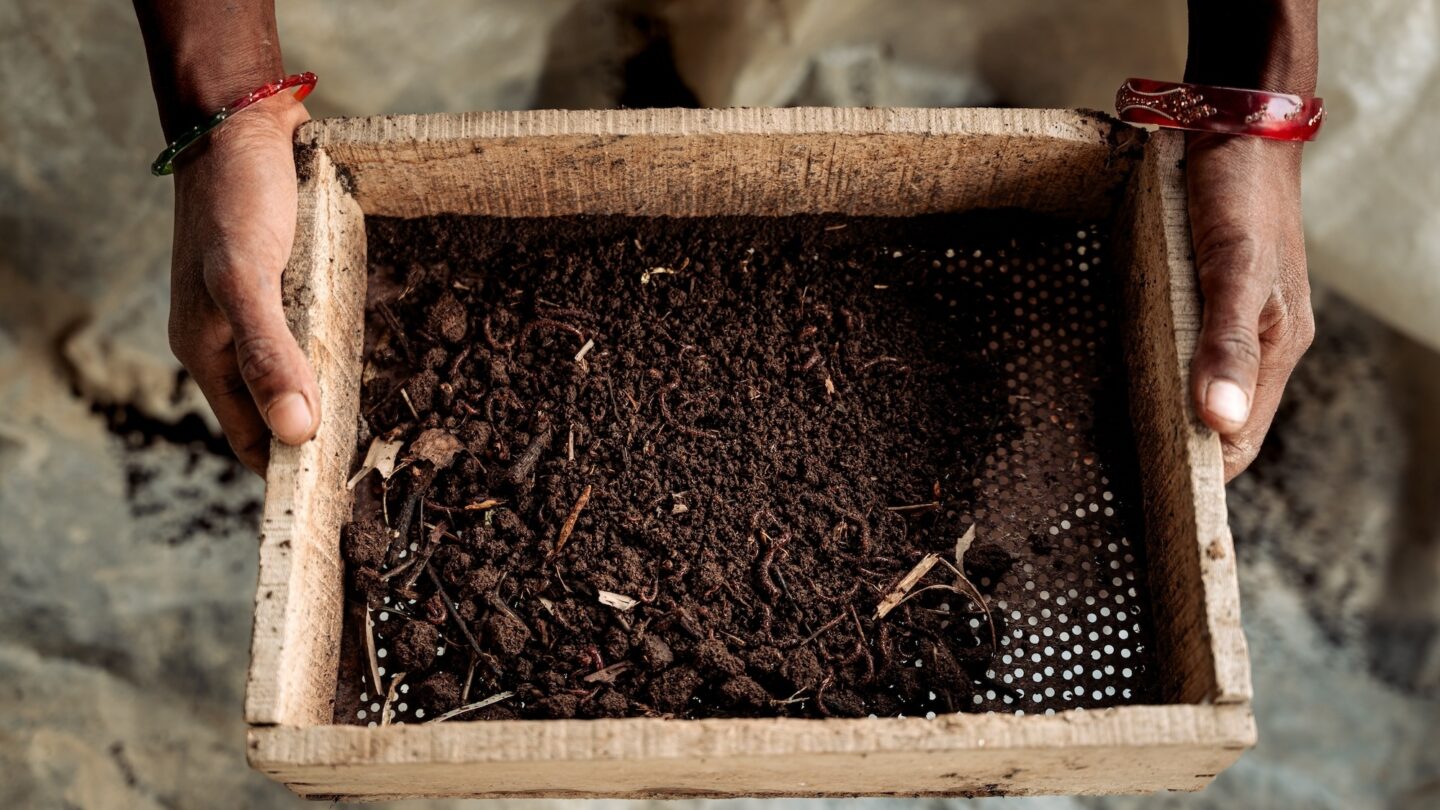
Through this market-led approach, iDE Nepal boosts rural incomes and nutrition via three pathways: tricho-vermicompost enterprises that cut fertilizer reliance, youth-led business facilitators connecting remote farmers to markets, and poultry enterprises empowering women to provide protein to mothers and children in their first 1,000 days.
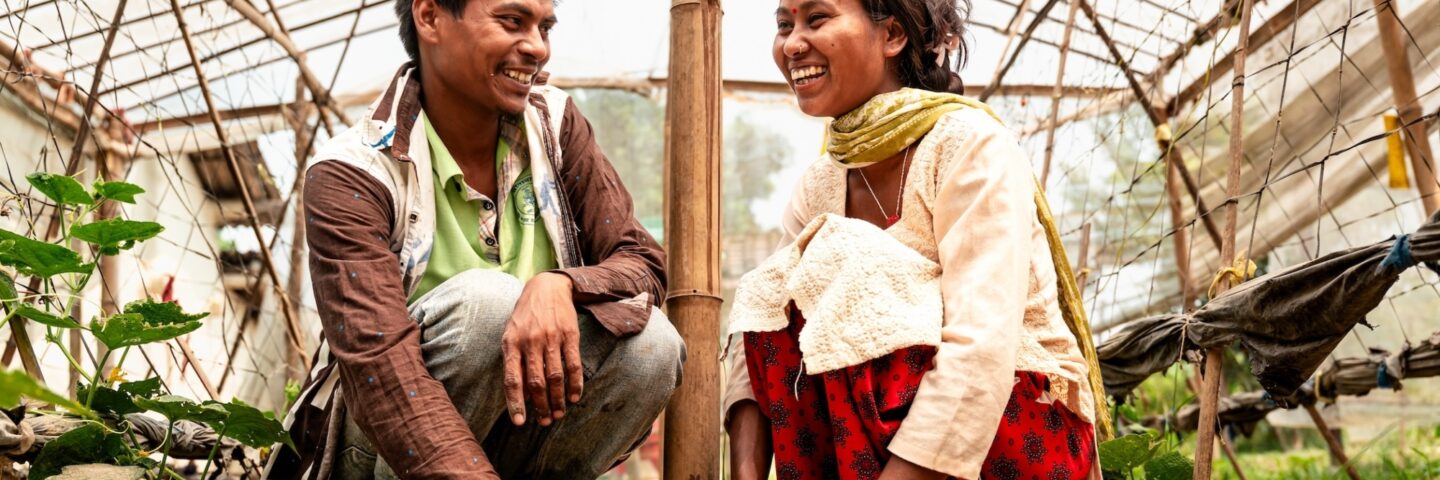
With iDE, Santoshi learned improved farming techniques, including proper seed use and tunnel farming for off-season vegetable production. Photo by iDE Nepal.
When Food Availability Alone Is Not Enough
For many low-income families like Santoshi's, healthy foods remain unaffordable for regular consumption, limiting dietary diversity. Behavior change and education also play a key role in helping individuals and households understand the value of diverse, nutritious diets and make informed food choices.
A significant part of the nutrition challenge is limited access, a key driver of poverty. Like many women in her community, Santoshi worked long hours on the family farm alongside her husband, growing crops mainly for household use with little income. Nutritious foods may be available in local markets, but vulnerable households often face geographic, social and economic barriers that limit consistent access to healthy food and information.
Santoshi’s farming practices gradually began to change after she became involved in project activities and training. With iDE Nepal, she learned improved farming techniques, including proper seed use, tunnel farming for off-season vegetable production, and sustainable practices using organic inputs such as tricho-vermicompost, vermiwash and ‘jholmol’.
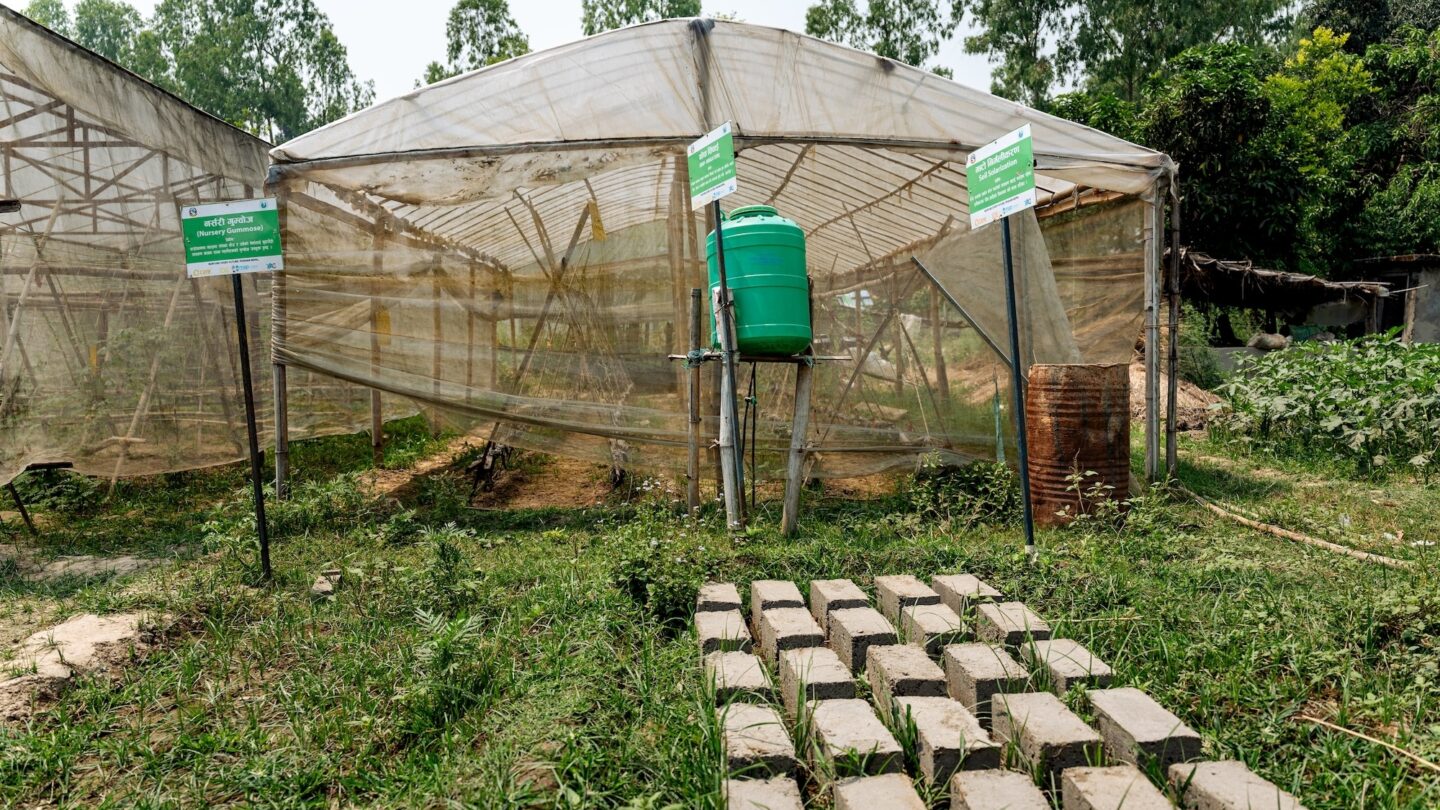
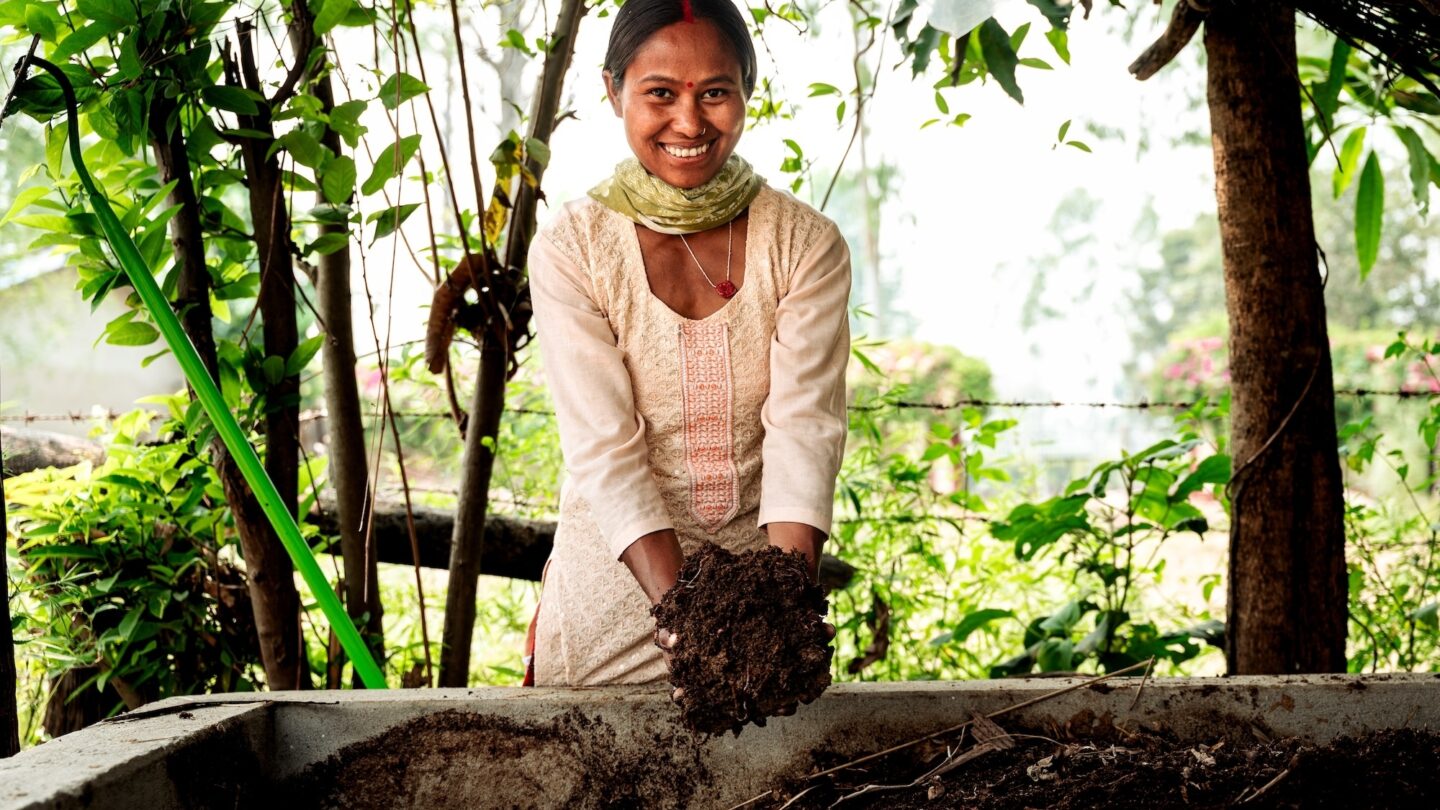
Since 2023, the iDE Nepal-led Mother and Child Wellbeing Poshan project has been working to strengthen nutrition-sensitive livelihoods and rural market systems through entrepreneurship pathways that support farming women and their communities. Photo by iDE Nepal.
These practices helped her transition from traditional farming toward more productive and market-oriented agriculture. Now, Santoshi grows and sells seasonal vegetables while also producing and selling organic agricultural inputs. What was once subsistence farming has gradually evolved into a diversified livelihood activity linked to local market demand.
This season, she estimates earning around NPR 25,000 through vegetable production and related agricultural activities. With increased income, her family has been able to invest in productive assets such as a push cart and a mini tiller, further strengthening their farming operations.
As her confidence and production capacity grew, Santoshi started building connections with local market vendors, starting a produce collection and selling point for her produce at local haat bazaars. New to formal agricultural support, Santoshi now regularly visits the local Gyan Kendra to access information and guidance on farming and enterprise development. She has also opened a bank account and formally registered her community learning and vermicompost business.
Similarly, the project is not only creating businesses but also creating local ecosystems. Across Nepal’s rural economy, climate variability, pest pressures and declining soil health continue to reshape agricultural livelihoods. At the same time, limited access to skills, services and markets restricts economic opportunities, particularly for young women in rural communities.
Story by Thinley Ghale for iDE Nepal. Photo's by Tilak Gaha Magar for iDE Nepal.