

A Toilet Means More Than You Think
Beyond health and hygiene, durable sanitation is an investment in dignity, safety, and household progress, if the market can meet community needs.
This story is part of a series co-published by CARE, iDE, and IDinsight on scaling market-based sanitation programs from the start, and built to deliver lasting impact through local systems. In this series, we're sharing the lessons, challenges, and insights from our effort to design sanitation solutions capable of the durability, dignity, and progress households have been asking for all along. It's a partnership. Read more from the series here.
When we apply Human-Centred Design (HCD) in sanitation, we often talk about it as if we are explorers arriving at a blank slateiDE has always operated on a simple principle: talk to the people who have the problem, and listen to what they say. We believe people are more likely to invest their own money in a solution that comes from their own ideas and true aspirations. That solution is also more likely to be sustainable and cost-effective. HCD is a systematic method for gaining a deep understanding of customers, their environments, and their routines, in order to create innovative solutions to the problems they face.
We come with our notebooks, our interview guides, and our commitment to "no assumptions," waiting for people to tell us what they need. And of course, listening deeply matters. But if we pause long enough to observe, we realize that communities are already speaking to us.
“They speak through what they build, what they repair, what they save for, and what they keep trying to improve, even when the current options fail them.” — HCD Team
During our work in Chisekesi, in Southern Province, Zambia, this became clear. Sanitation was rarely just about health. It was also about dignity, status, and the quiet hope for something that finally lasts.
These insights emerged through the different phases of the HCD process: listening to households, observing how people currently build and rebuild, testing ideas with communities, and engaging local business owners to understand what a stronger sanitation offer would need to deliver. At each stage, the message became clearer: People were not waiting to be convinced that sanitation matters. They were waiting for an option that matched their aspirations, their finances, and their realities. Across interviews, observations, and prototype testing, the pattern was remarkably consistent. Households described wanting toilets that were stronger, cleaner, and more aspirational than what was currently available. The challenge was not convincing people to invest. It was finding a way to align products, financing, and supply chains with how people already live and spend.
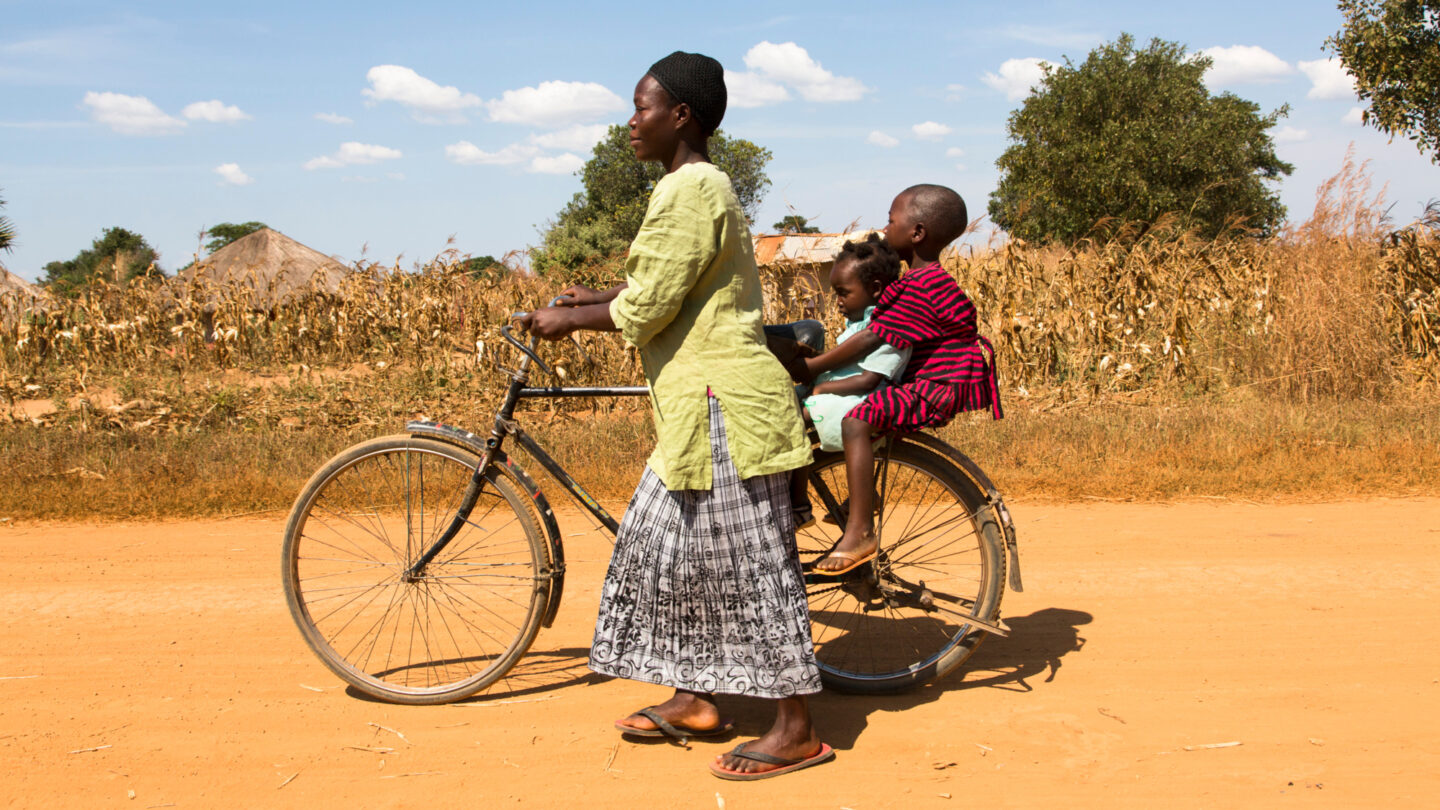
In countries like Zambia where iDE operates, sanitation is rarely just about health. It's about dignity, and the hope for something lasting. Photo by iDE Zambia
A toilet is never just a toilet
In Chisekesi, people talk about a good toilet as more than just the prevention of disease. Mothers talk about the privacy and safety of their children when asked what matters most to them. A mother talks about wanting something modern. Something clean. Something she would not feel ashamed for a visitor to use. She talks about the pride of having a long-lasting and beautiful toilet.
In these communities, a toilet is a visible marker of progress. It sits alongside other signs of household improvement: a stronger roof, a better house, a new television and a more secure front door.
A toilet tells the world that this family is moving forward. Sanitation programs that focus strictly on health miss a core reality: Households in Chisekesi deeply value toilets for safety, comfort and dignity, but lack access to durable options. Instead of neglecting sanitation, families are trapped in a costly, relentless cycle of rebuilding simple pit latrines that collapse every rainy season. Their repeated investments show strong demand, but current options fail to protect their time, labor and money with lasting quality.
In peri-rural markets, income is also often seasonal and uneven. Households rarely build everything at once. They build step by step: digging a pit first, buying materials later, adding walls or finishes when cash becomes available.
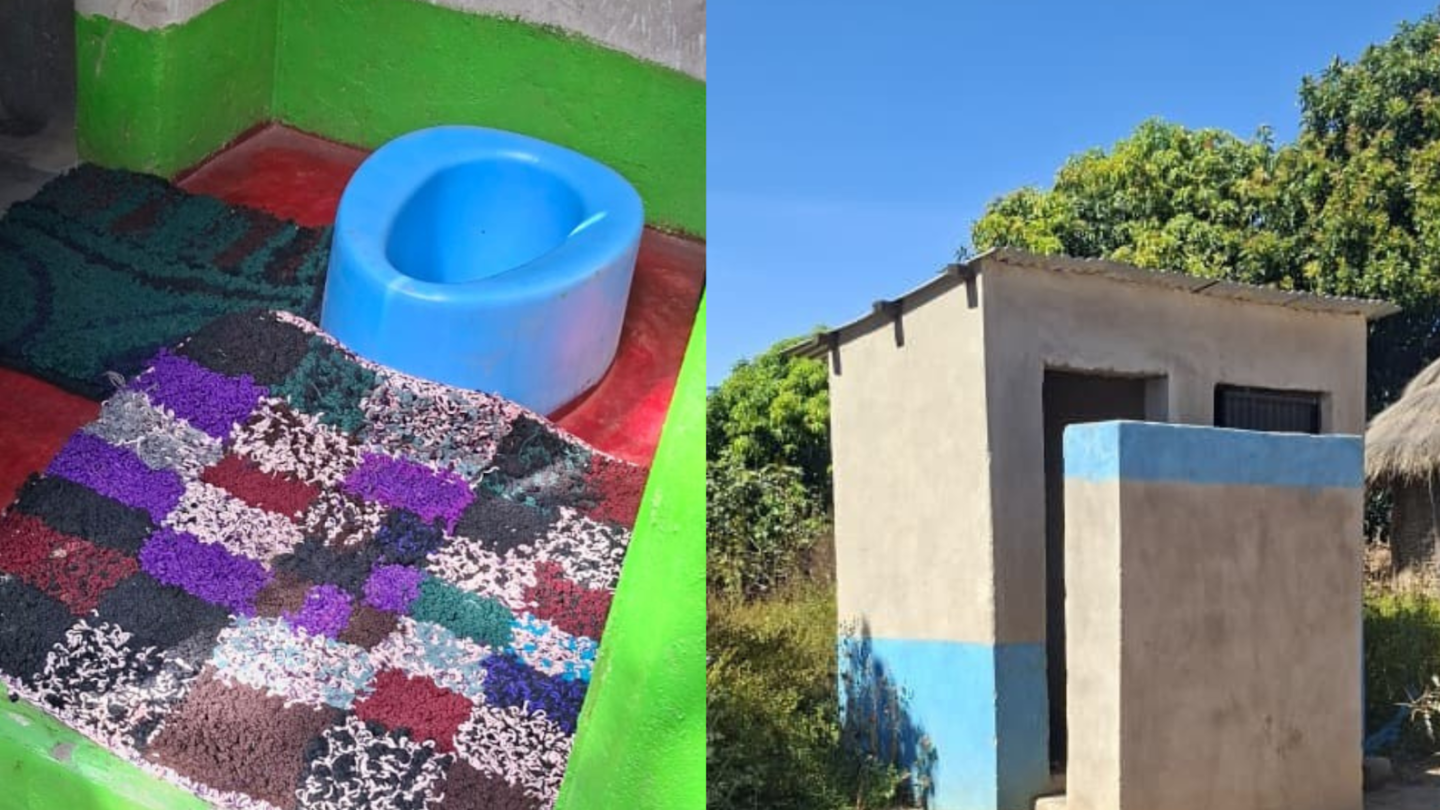
Interior of a household toilet fitted with a SATO Stool. (left).The picture with iDE supported stool and doormat - Interior views of a household toilet (right). Photo by iDE Zambia.
What durability really means
True progress is not simply the moment a latrine is built. It is the confidence that the structure will continue to serve the family through the next rainy season, the next school term, and the next harvest. Durability is not only a technical feature, it is a form of dignity, because it protects a family's labor, money, and hope.
As the project moved from listening to testing, one insight became especially important: Many people were not asking for small upgrades or temporary fixes. What was striking was how often households described the same end state. Features such as durable pits, strong slabs, doors for privacy, cleaner user experiences, and a more finished appearance repeatedly emerged as priorities.
Some said they would be willing to wait up to a year if it meant getting the right product.
That willingness to wait matters. It shows that households are familiar with patience. Many have already spent years building bit by bit, saving slowly, repairing what they can, and waiting for the next moment when money becomes available. But this time, the waiting felt different. It was not just waiting with uncertainty. It was waiting with renewed hope — hope that the next investment would be the right one, and that their money, labor, and trust were finally moving in the right direction.
The challenge was not identifying what people wanted. It was figuring out how to deliver those qualities at a price and through a supply chain that could work in rural Zambia.
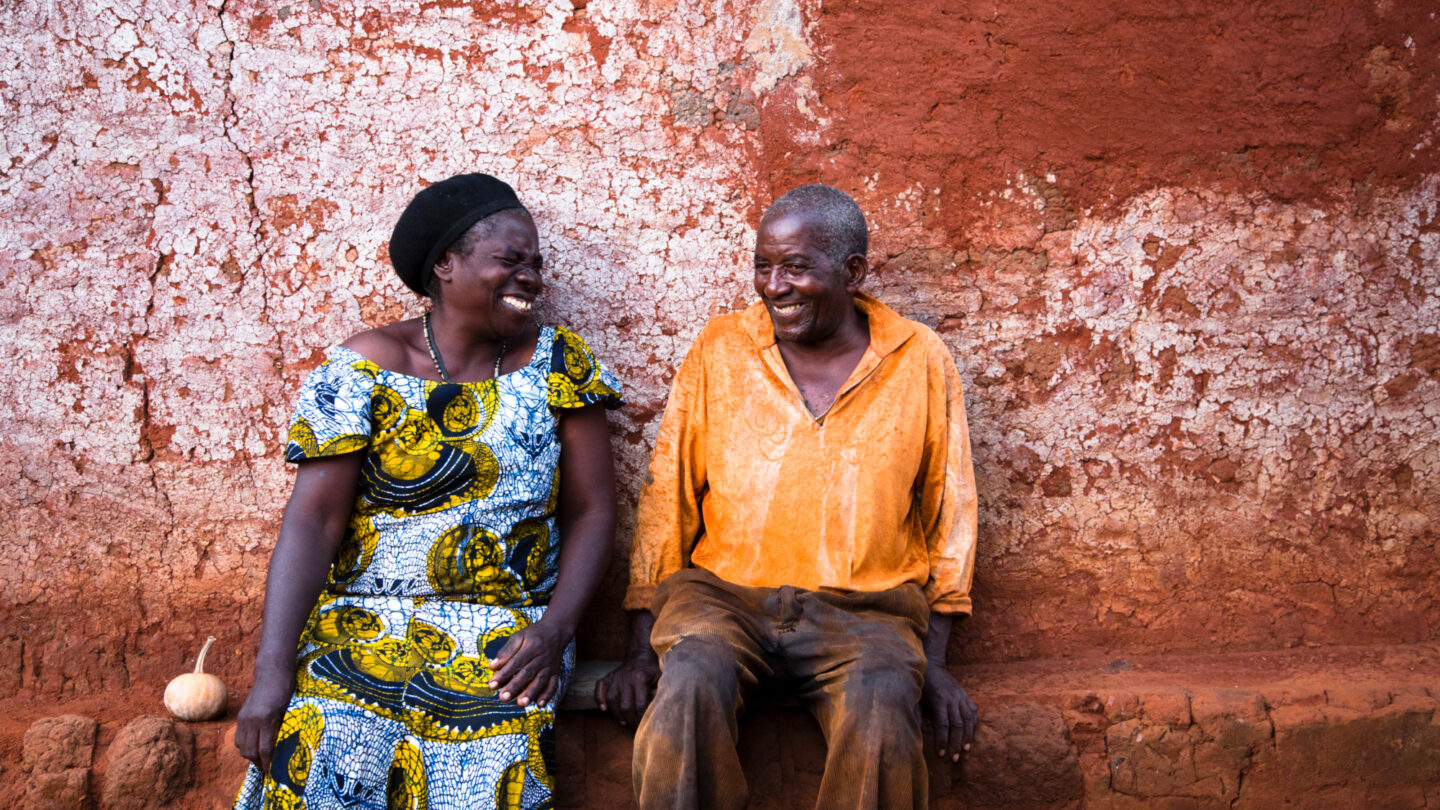
When early adopters move first, they create the social proof that allows others to follow. Photo by iDE Zambia
Starting with those ready to move
The way forward begins by paying attention to the families who are already leaning forward. In every market, there are households actively looking for something better. They ask masons detailed questions. They compare materials. They save slowly for a stronger slab. They notice what neighbors are building and quietly imagine the same for themselves.
These early adopters matter, not because the solution is designed only for them, but because they provide a practical starting point. The wider goal is to create an offer that can work for many households, from those ready to invest now to those who will need more time, proof, and reassurance. Early adopters are simply the first to move. They are more likely to take the initial risk, try the product, and make aspiration visible in the community.
Starting with readiness is not exclusion. It is smart sequencing. When early adopters move first, they create the social proof that allows others to follow.
It's not just a price problem
But even the most motivated household cannot invest if the payment model does not match how money actually moves.In peri-rural markets, income is often seasonal and uneven. Households rarely build everything at once. They build step by step: digging a pit first, buying materials later, adding walls or finishes when cash becomes available. This is not indecision. It is financial management.
One of the clearest insights from the HCD process was that affordability is not only about price. It is also about rhythm. Many households told us they were willing to make significant investments, but only when those investments aligned with harvest cycles, savings group share-outs, and other moments when cash was actually available and not in conflict with school fees and other household priorities. So when sanitation products require one large upfront payment, they often clash with real life. The better question is not only, "How much are people willing to pay?" It is also, "When do people have money, and how do they already pay over time?"
If payment options do not reflect these rhythms, even a desirable product can remain out of reach.
Designing the market around real lives
Of course, context still matters. A design that works in one place may not work in another. Soil conditions, rainfall, flooding, materials, transport, and local supply chains all shape what durability actually requires.
We cannot copy and paste a sanitation solution from one province to another.
But while the technical context changes, some human patterns repeat. People want value for money. They want their children to be safe. They want privacy. They want to feel proud of their home. They want their effort to lead somewhere lasting.Ultimately, our job as innovators is not to discover whether people want a better life. They show us that they do every time they rebuild, repair, save, ask questions, or try again after disappointment. Our job is to stop treating households as passive beneficiaries who need to be convinced and start treating them as customers who deserve a better offer. This does not mean replacing the existing sanitation market. It means strengthening it. By working with local business owners and other actors already serving these communities, we can help the system function better, with clearer offers, more reliable delivery, better coordination, and products that match what households actually value.
A toilet is never just infrastructure.
It is an investment in dignity, safety, comfort, and progress. And if households are already willing to make that investment, then our responsibility is to make sure the market can deliver something that finally lasts. In our next phase of work, the question becomes how to turn these insights into a sanitation offer and supply chain capable of delivering the durability, dignity, and progress households have been asking for all along.
This story was produced by the iDE Zambia team.
Read More
